


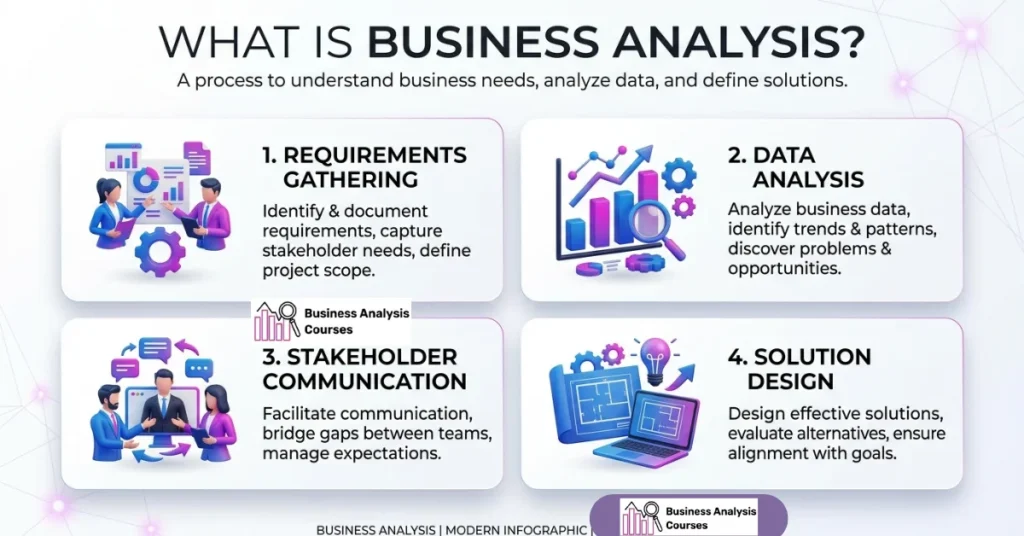
What is Business Analysis Actually Means
What Does a Business Analyst Do?
Core Skills Every BA Needs
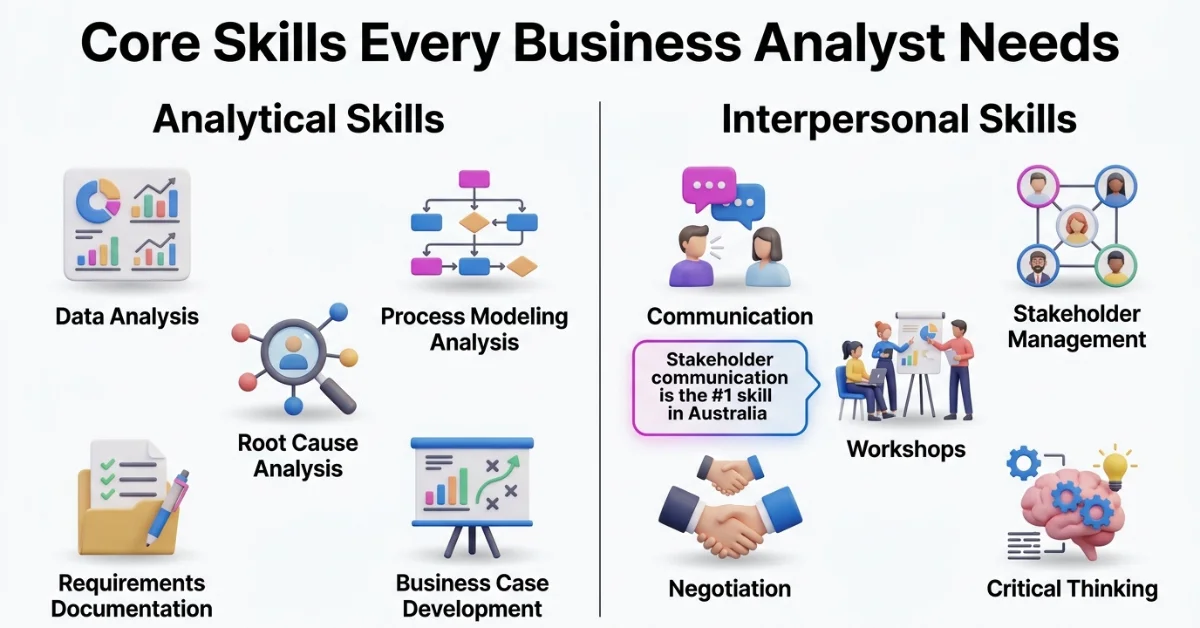
Strong business analysis certification skills fall into two categories — analytical and interpersonal. Both matter equally in practice.
Analytical Skills:
- Requirements elicitation and documentation
- Process modelling and workflow analysis
- Data analysis and interpretation
- Root cause analysis
- Business case development
Interpersonal Skills:
- Stakeholder management and communication
- Facilitation of workshops and meetings
- Negotiation and conflict resolution
- Active listening and critical thinking
Business Analysis vs Project Management
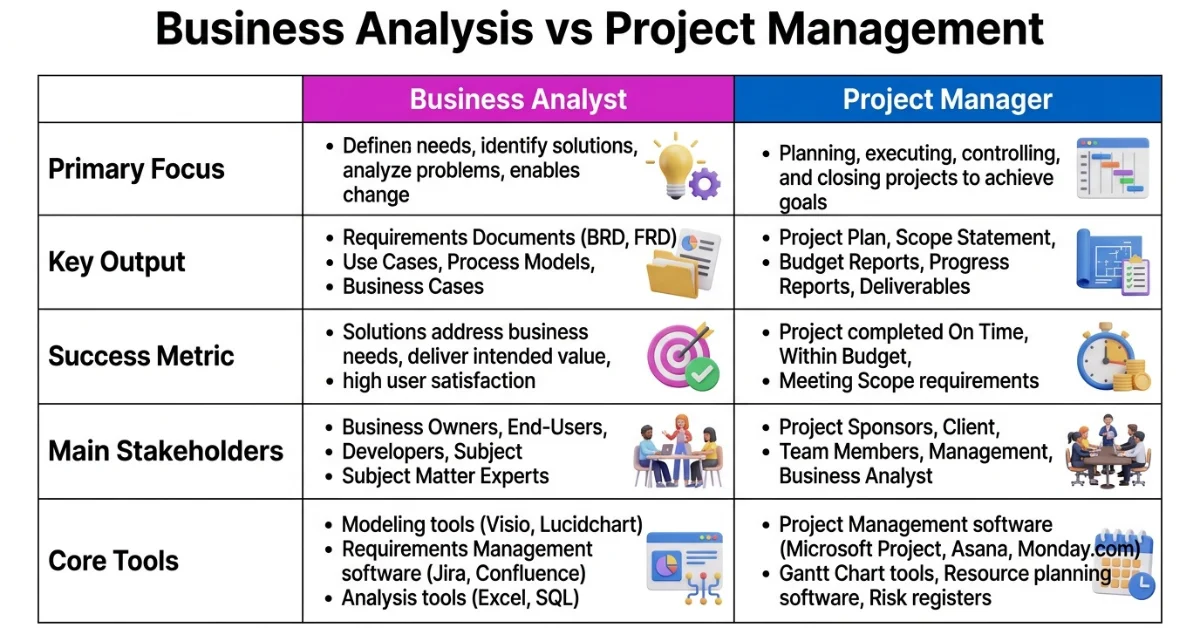
| Area | Business Analyst | Project Manager |
| Primary Focus | What to build and why | How to deliver it and when |
| Key Output | Requirements, BRD, user stories | Project plan, risk register, status reports |
| Success Metric | Solution solves the right problem | Project delivered on time and budget |
| Main Stakeholders | Business owners, end users | Sponsors, delivery team, vendors |
| Core Tools | Process maps, use cases, wireframes | Gantt charts, RAID logs, WBS |
Both roles work together — but the BA defines the destination while the PM manages the journey.
The Business Analysis Process
A structured BA process follows a clear sequence regardless of methodology used.
- Understand the Business Problem Before any requirements are written, a good BA takes time to understand the problem at a strategic level. This means reviewing existing documentation, running stakeholder interviews, and building context around what the organisation is trying to achieve.
- Elicit and Document Requirements This is the core of the role. Techniques include workshops, surveys, observation, and prototyping. The output is a clear set of functional requirements that describe what the system or process must do.
- Analyse and Model the Current State Process mapping and workflow analysis give stakeholders a visual understanding of how things currently work. This step often reveals inefficiencies that were not obvious before.
- Define the Future State The BA works with stakeholders to agree on what the improved process or system should look like. This future state forms the foundation of the solution design.
- Validate and Sign Off Requirements Requirements go through a review cycle with key stakeholders before the build phase begins. Clear sign-off here prevents costly scope creep later.
IIBA Certifications for Australian BAs
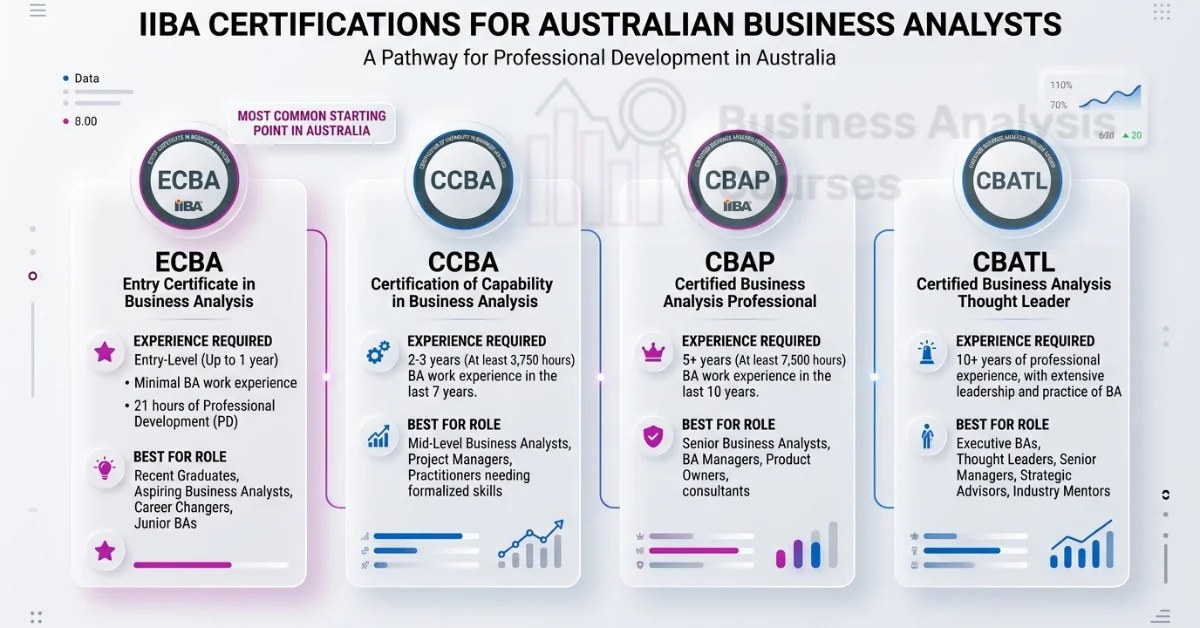
In Australia, IIBA certifications are the most recognised pathway for professional credibility in business analysis. Here is how the certification ladder works:
| Certification | Full Name | Experience Required | Best For |
| ECBA | Entry Certificate in BA | None | Career changers and graduates |
| CCBA | Certificate of Capability in BA | 3,750 hours work experience | Mid-level practitioners |
| CBAP | Certified Business Analysis Professional | 7,500 hours work experience | Senior BAs |
| CBATL | CBAP with Leadership | CBAP + leadership hours | Leads and consultants |
The ECBA is the most common starting point for Australians entering the field. Many employers now list IIBA certification as a preferred requirement in job ads across Sydney, Melbourne, and Brisbane. Completing a recognised business analysis course is the fastest way to get exam-ready and meet the ECBA knowledge requirements.
Business Analyst Salary in Australia
Salary data varies by experience level, industry, and location. Based on current market data from SEEK and LinkedIn Australia:
| Experience Level | Average Annual Salary (AUD) |
| Graduate / Junior BA | $65,000 – $80,000 |
| Mid-Level BA (3–5 years) | $90,000 – $110,000 |
| Senior BA (5+ years) | $115,000 – $140,000 |
| Lead / Principal BA | $140,000 – $165,000+ |
How to Start Your BA Career in Australia
The practical path looks like this:
- Take a structured BA course — look for programs that cover the BABOK Guide and include hands-on requirements workshops.
- Earn your ECBA — it signals credibility to employers even without prior BA experience.
- Build a portfolio — document a real-world process improvement, even from your current job.
- Target entry-level roles — look for titles like Junior BA, Systems Analyst, or Business Systems Officer.
- Join the IIBA Australia chapter — networking opens doors faster than most other tactics.
The demand for qualified business analysts across Australian industries — particularly in government, finance, healthcare, IT, and infrastructure — continues to grow year on year.
Frequently Asked Questions
What does a business analyst do day to day?
A business analyst spends most of their day communicating — running workshops, writing requirements, reviewing documentation, and aligning stakeholders on scope and priorities. The exact mix depends on the project phase and whether the organisation follows agile or waterfall delivery.
Do you need a degree to become a business analyst in Australia?
No formal degree is required. Most Australian employers look for relevant experience, strong communication skills, and ideally an IIBA certification or completion of a recognised https://businessanalysiscourses.com.au/.
Is business analysis a good career in Australia?
What is the difference between a business analyst and a systems analyst?
A business analyst focuses on the broader business problem and stakeholder requirements. A systems analyst focuses more specifically on how IT systems need to change to meet those requirements. In practice, the roles often overlap, especially in smaller teams.
How long does it take to become a business analyst?
What industries hire business analysts in Australia?
The biggest employers of BAs in Australia are the government (federal and state), financial services, healthcare IT, retail technology, and infrastructure project delivery. Almost every sector that runs digital transformation or process improvement projects employs BAs.
Recommended Resources
IIBA BABOK Guide v3 — The global standard for business analysis knowledge areas, techniques, and competencies. Available via the IIBA website at iiba.org.
SEEK Australia BA Salary Insights — Updated salary data by city and experience level for business analyst roles across Australia. Available at seek.com.au.
Australian Computer Society (ACS) Digital Pulse Report — Annual report on ICT workforce demand in Australia, including business analysis roles. Available at