


How to Become a Business Analyst in Australia is a process that involves developing essential analytical skills, strong business understanding, and relevant practical experience to succeed in the Australian job market. This journey often begins with online business analysis training, alongside building skills such as identifying business problems, analysing processes and data, and effectively communicating with a wide range of stakeholders—all of which are critical for long-term success in the BA profession.
To stand out, start with the basics: learn how to analyse business needs, build confidence with tools like Excel and Power BI, and practice asking great questions. Real experience — through internships, side projects or practical exercises — is what makes your profile believable and appealing to recruiters.
Business Analysts are in demand across industries in Australia, especially where digital transformation, reporting and process improvement are priorities. It’s less about coding and more about understanding how businesses work and how change can be guided thoughtfully.
What Does a Business Analyst Do?
In Australia, a Business Analyst typically works at the intersection of business needs and technical delivery. The role focuses on understanding what a business wants to achieve, documenting it clearly, and helping teams make changes that work.
A typical Australian ICT Business Analyst job might involve:
- Talking with stakeholders to understand problems
- Gathering and clarifying business requirements
- Mapping out current and ideal processes
- Translating ideas into user stories or functional specifications
- Helping delivery teams interpret business needs
- Supporting testing and rollout activities
- Identifying opportunities to improve reporting or systems
If you enjoy organising information, asking clarifying questions, and helping teams get aligned on what really matters, this career could suit you well.
Skills Needed for a Business Analyst Career in Australia
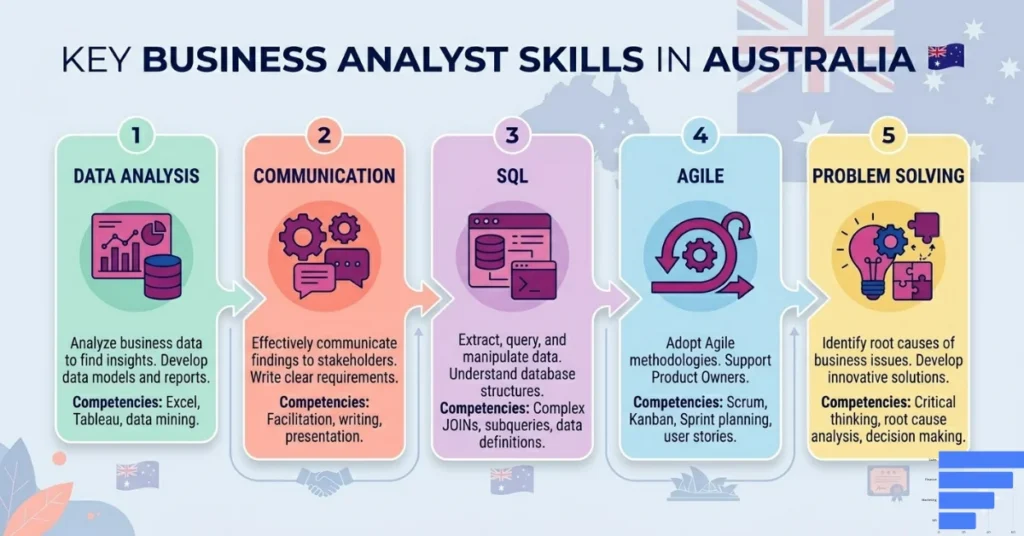
To be successful as a business analysis in Australia, you’ll blend business sense, clear communication and some technical comfort. Here’s what employers value most:
Requirements Gathering
This is about listening well and asking the right follow‑up questions. Stakeholders often think they know what they want — but uncovering the real need takes skill and empathy.
Process Mapping
Being able to draw how work currently flows and how it should flow is vital. It helps decision‑makers see inefficiencies and opportunities visually.
Clear Documentation
Good writing makes complex ideas easier to act on. Whether it’s requirement lists, meeting notes or decision logs, clarity matters.
Data Skills
You don’t need to be a data scientist, but being comfortable with Excel, basic SQL and dashboards helps you support business cases and insights.
Stakeholder Communication
This isn’t corporate jargon — it means managing expectations, resolving confusion, and helping people stay focused on shared goals.
Agile Awareness
Most workplaces use Agile methods. Understanding user stories, sprints and backlogs gives you an advantage in digital teams.
Best Courses to Become a Business Analysis in Australia
There’s no single course every employer demands — but having recognised learning can strengthen your profile.
In Australia, courses are structured under the Australian Qualifications Framework (AQF), meaning a diploma, bachelor’s or graduate certificate has consistent recognition nationally.
Useful study areas include:
- Business
- Information Technology
- Information Systems
- Commerce
- Project Management
- Data Analytics
Here’s how to choose your study path:
Starting out of school: A bachelor’s degree in IT, business or related fields gives a strong foundation.
Changing careers: Short courses, graduate certificates or recognised training can help you pivot, especially if you demonstrate practical skills.
Flexible learning: Diplomas or online certificates work well if combined with real‑world examples or portfolio pieces.
Rather than picking a course with the most impressive marketing, choose one that helps you produce work employers can assess — like process maps, requirement documents and dashboards.
Do You Need a Degree to Be a Business Analyst Role?
Short answer: No — but it helps.
Many Australian Business Analysts hold a bachelor’s degree, and some have postgraduate study. But what matters most to employers is what you can do.
If you don’t have a degree, you can still demonstrate capability through:
- Portfolio pieces
- Real or simulated business analysis work
- Documentation samples
- Dashboard examples or reports
- Relevant work in operations, support, admin or project teams
Employers want evidence that you can think critically, communicate clearly, and help teams make better decisions.
Business Analyst Certifications in Australia
Certifications aren’t mandatory — but they can help, especially if you’re new to the field.
A popular option is the Entry Certificate in Business Analysis (ECBA) from the International Institute of Business Analysis (IIBA). It signals foundational knowledge and commitment to the profession.
Certifications can be useful when:
- You’re changing careers
- You need structured learning
- You want credibility without years of experience
They matter less when you already have solid work examples and proven outcomes.
Entry‑Level Business Analyst Jobs in Australia
Many beginners make the mistake of waiting for a “Junior Business Analyst” title — but there are smart ways to enter this career through adjacent roles.
Good stepping‑stone positions include:
- Junior Business Analyst
- Systems Analyst Support
- Project Coordinator
- Operations Analyst
- Business Support Analyst
- Reporting Analyst
- QA or Test Support
- Process Improvement Roles
These roles help you build core skills and experience that recruiters value in dedicated BA jobs.
A Practical Entry Plan
Here’s a straightforward way to start your business analyst responsibilities:
1. Build Core Knowledge
Learn key tools and concepts: requirements, process mapping, documentation, analysis and dashboards.
2. Create a Portfolio
Draft real or simulated pieces like:
- A process map for a business workflow
- A requirements document
- Sample user stories
- Dashboard mock‑ups
3. Gain Practical Experience
Volunteer for internal projects, support reporting improvements, or take on process documentation tasks.
4. Tailor Your CV
Focus on outcomes: “Improved process efficiency by clarifying requirements” sounds stronger than “led meetings.”
5. Apply Smartly
Apply widely — including roles that build analytical skills even if not titled “Business Analyst.”
How Long Does It Take?
Becoming competent typically takes 6 months to 3 years, depending on where you start:
- If you have related experience, you might be ready in 6–12 months.
- If you’re starting from scratch and studying formally, it might take longer — and that’s okay.
Most analysts feel they’re still learning even after landing a job. The field evolves with each project.
Business Analyst Salary Australia
Business Analyst salaries vary based on experience, industry, location and depth of technical skill. In general, ICT Business Analysts in Australia earn competitive pay, with many roles in financial services, professional services and government sectors.
How much you take home depends on:
- Seniority
- Sector (e.g., finance vs public sector)
- State (NSW and Victoria often have more opportunities)
- Contract vs permanent status
- Technical involvement (data or systems focus)
Overall demand remains strong — meaning more opportunities across states like NSW, Victoria and Queensland.
Career Progression for Business Analysts
You can grow in many directions from a BA role:
- Senior Business Analyst
- Systems Analyst
- Product Owner
- Project Manager
- Delivery Lead
- Process Improvement Specialist
- Consulting or Transformation Roles
- Data or Reporting‑Focused Positions
Your next move depends on what you enjoy — whether that’s strategy, delivery, or system design.
Final Thoughts
A career as a Business Analyst in Australia rewards clear thinkers who enjoy solving real business problems. It’s a role rooted in practical impact, essential across industries, and accessible through multiple learning and experience pathways.
Focus on building real skills, showing evidence of your thinking, and telling a clear story about what you’ve accomplished. That combination matters far more than jargon or hefty job titles.
If you’re ready to take the next step, exploring structured business analysis courses Australia can help you build those skills with clarity and confidence.
Frequently Asked Questions
What qualifications do I need to become a Business Analyst in Australia?
Relevant study or equivalent demonstrated skills — both are accepted paths.
Can I become a Business Analyst without experience?
Yes — if you compensate with practical proof like portfolio work or project involvement.
Is a Business Analyst a good career in Australia?
Yes — demand is high and the skills are used across many industries.
What skills do Australian Business Analysts need?
Core skills include requirements elicitation, documentation, stakeholder engagement, analysis and communication.
Do I need certification?
Not mandatory — but it can help if you’re new or changing careers.
How long does it take to become a Business Analyst?
Typically 6 months to 3 years, depending on your background and study commitment.