



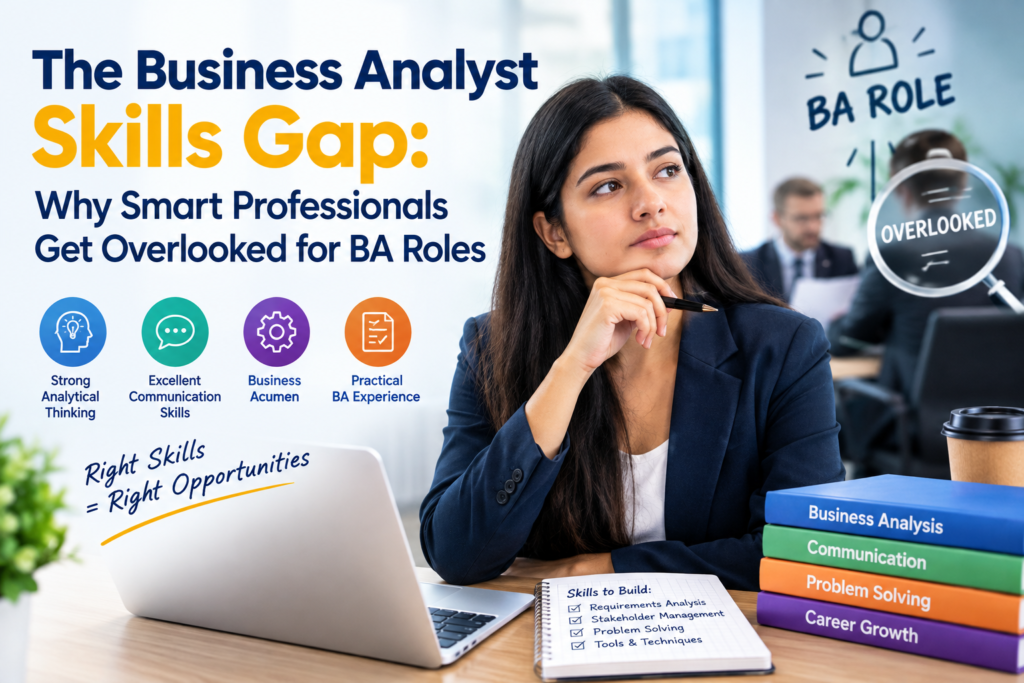
It happens in almost every organisation: a business analyst with two years of experience gets promoted to Senior BA or Lead BA ahead of a colleague who has been in the role for six or seven years. It looks unfair from the outside. From the hiring manager’s side, it rarely is. A well-planned business analysis course combined with the right visible work consistently outweighs raw years-on-the-job when promotion decisions get made in Sydney, Melbourne, Brisbane, Perth, Adelaide and Canberra. This article breaks down exactly why, and what employers reward instead of tenure.
The Experience Trap: Why Years on the Job Isn’t a Promotion Plan
Time in a role proves you can sustain a job. It does not prove you can run a requirements workshop with a difficult stakeholder, translate a vague business problem into a clear solution, or defend a recommendation to a steering committee. A structured business analysis course builds exactly these muscles faster than years of repeating the same process documentation tasks. That is why two business analysts with very different tenure can sit in the same promotion round and get opposite outcomes.
- BA A has seven years of experience but has only ever written functional specs for one internal system.
- BA B has two years of experience but has run stakeholder workshops, built process maps across departments, and completed a structured BA qualification alongside the job.
Only one of them looks ready for a senior title to a hiring panel. The other still looks like a specialist stuck in one narrow lane.
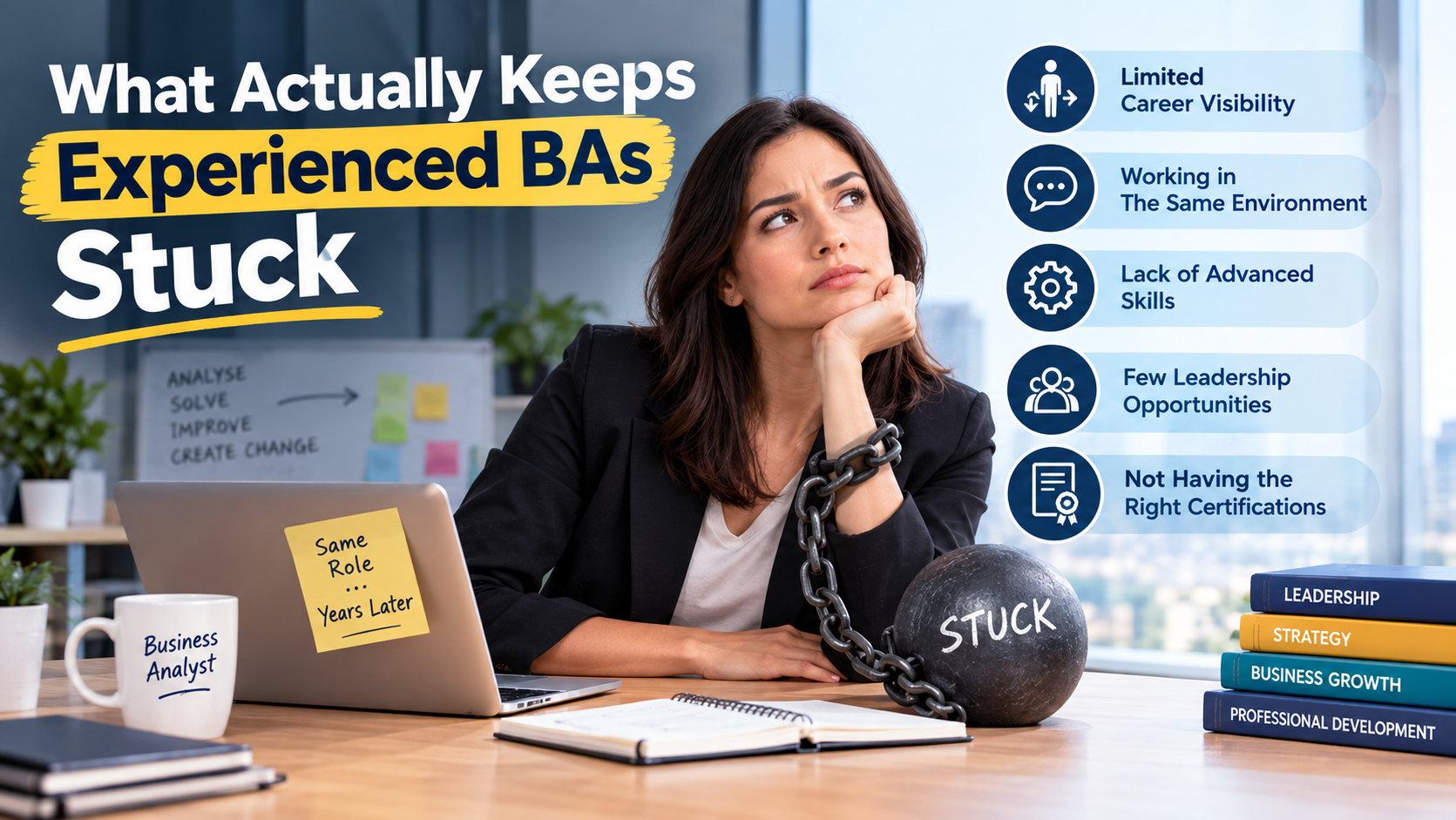
What Actually Keeps Experienced BAs Stuck

1. Narrow Exposure to One System or Department
Years spent on the same product or the same internal system builds depth but not breadth. Senior roles need evidence of handling different problem types a gap a structured business analysis course deliberately closes through varied case studies and techniques.
2. No Framework for Stakeholder and Requirements Work
Experience without a formal framework (BABOK, Agile BA practices, process modelling standards) often means inconsistent documentation and ad hoc requirements gathering — visible immediately to a panel comparing candidates.
3. Treating the Resume Like a Timeline, Not a Track Record
“7 years as a Business Analyst” is a duration, not an achievement. The resumes that get promoted quantify impact: number of stakeholders managed, process efficiency gained, cost saved through a recommended solution.
4. Staying in One City’s Job Pool Without Building a Network
BAs who only interact within one team miss the cross-functional exposure and internal referrals that drive promotion decisions especially in tighter markets like Adelaide and Canberra where senior BA roles are filled through internal visibility as much as formal applications.
What Employers Actually Reward: The Fast-Promotion BA Profile
Across Sydney, Melbourne, Brisbane and Perth job listings and internal promotion criteria, a consistent pattern shows up. Employers reward:
- Formal frameworks applied in practice BABOK-aligned techniques, structured requirements documentation, and clear traceability.
- Cross-functional exposure evidence of working across more than one department, system or business unit.
- Stakeholder facilitation skills running workshops, managing conflicting priorities, and presenting recommendations confidently.
- Data and process literacy comfort with process mapping tools, basic data analysis, and business case development.
- Documented, measurable outcomes a track record a panel can verify, not just a list of past job titles.
How to Turn a Business Analysis Course Into a Faster Promotion
Step 1: Audit Your Exposure, Not Just Your Tenure
List the systems, departments and stakeholder types you’ve actually worked with. If the list is short, that’s the first gap to close through a structured business analysis course that deliberately covers varied case studies.
Step 2: Build a Portfolio of Outcomes, Not Just Duties
Document three to five projects where you can point to a measurable result: a process simplified, a cost avoided, a stakeholder conflict resolved. Reference these directly in promotion conversations instead of listing responsibilities.
Step 3: Target the Right Cities and Employers
Demand for qualified BAs is strongest right now in Sydney, Melbourne and Brisbane, with steady growth in Perth and Adelaide driven by finance, government and healthcare transformation projects. Search local listings on Seek and LinkedIn Jobs to benchmark salaries in your city before negotiating.
Step 4: Keep Stacking Recognised Credentials
Employers consistently promote analysts moving toward IIBA-recognised certifications or agile business analysis credentials. The International Institute of Business Analysis (IIBA) outlines the logical next steps after foundational training.
Real Salary and Promotion Signals: What the Data Shows
Government labour data from the Australian Bureau of Statistics and job-board salary guides consistently show business analysis roles earning well above the national average wage once professionals move from junior documentation work into senior, stakeholder-facing responsibility. The gap between a stuck senior-tenure BA and a fast-promoted junior BA is rarely years of service it’s the framework, exposure and evidence built alongside it.
Frequently Asked Questions
Is a business analysis course enough to get promoted ahead of more experienced colleagues?
It’s enough to build the framework and evidence panels look for, especially in Sydney and Melbourne. Actual promotion still requires applying that framework on real projects and documenting the outcomes.
How long does it take for a junior BA to reach Senior BA level?
Professionals who actively pursue cross-functional exposure and complete structured training typically move from junior to senior BA within two to four years, faster than the traditional five-to-seven-year path.
Which Australian cities have the strongest demand for qualified business analysts?
Sydney, Melbourne and Brisbane currently list the highest volume of BA roles, with Perth and Adelaide growing steadily on the back of major transformation programmes.
Ready to Move Past the Experience Plateau?
A structured, mentor-led business analysis course closes the exact gaps outlined above frameworks, cross-functional exposure and a documented track record tailored to the Australian job market. Explore course options at businessanalysiscourses.com.au, read city-specific guidance for Sydney and Melbourne, or contact the team to discuss which track fits your goals.