
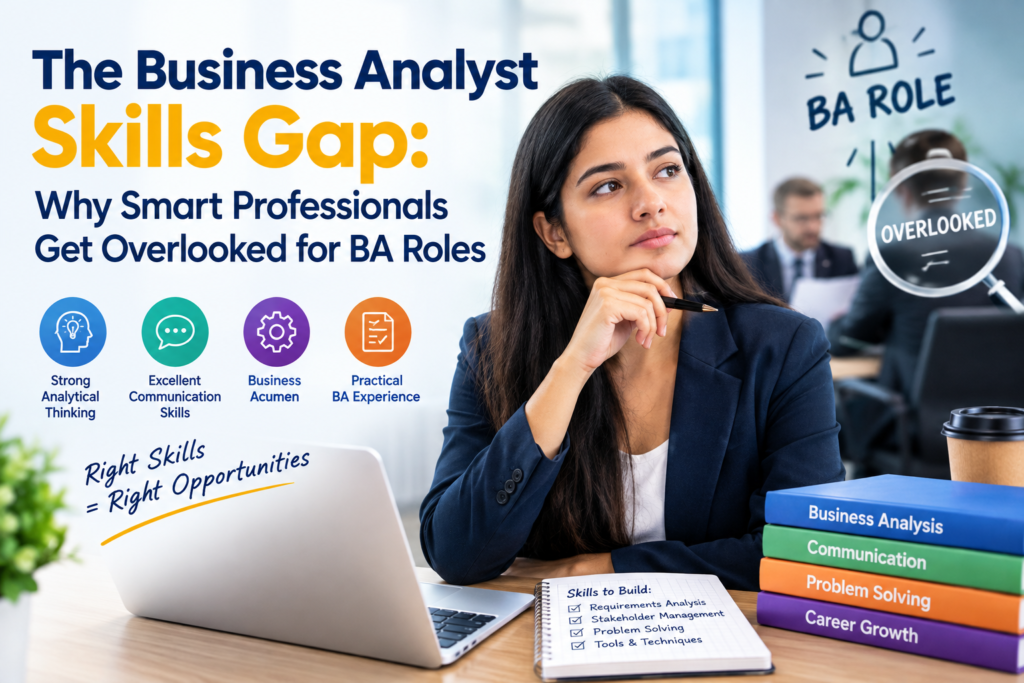
The business analyst skills gap catches out a specific kind of candidate: the smart, capable professional who has genuine business instincts but gets passed over anyway. They can read a P&L, spot an inefficient process, and explain a problem clearly to a room full of stakeholders. Yet they keep losing BA roles to candidates with less real-world judgement but a sharper, more structured skill set on paper.
This isn’t a talent problem. It’s a translation problem. The business analyst skills gap usually comes down to a handful of specific, learnable techniques and tools that hiring managers expect to see clearly demonstrated, not vague general business acumen. Once you know exactly what’s missing, closing the gap is far more straightforward than it feels from the outside.
What Is the Business Analyst Skills Gap, Really?
The business analyst skills gap is the difference between having strong general business judgement and having the specific, structured toolkit employers use to test for BA capability: recognised frameworks, requirements techniques, process modelling notation, and the technical tools that let an analyst work with data directly. Smart professionals often have the judgement half already. What’s missing is the structured, demonstrable half that a resume and interview can actually showcase.
Why the Business Analyst Skills Gap Overlooks Smart, Capable Professionals
Five specific gaps repeatedly explain why sharp, experienced professionals get passed over for BA roles.
1. Strong Instincts, No Structured Methodology
Good judgement isn’t the same as a demonstrable technique. Employers increasingly screen for familiarity with recognised frameworks like BABOK, the globally recognised body of knowledge for business analysis. Without exposure to it, even sound analytical instincts can look unstructured on paper, which is a core driver of the business analyst skills gap.
2. Missing the Technical Toolkit
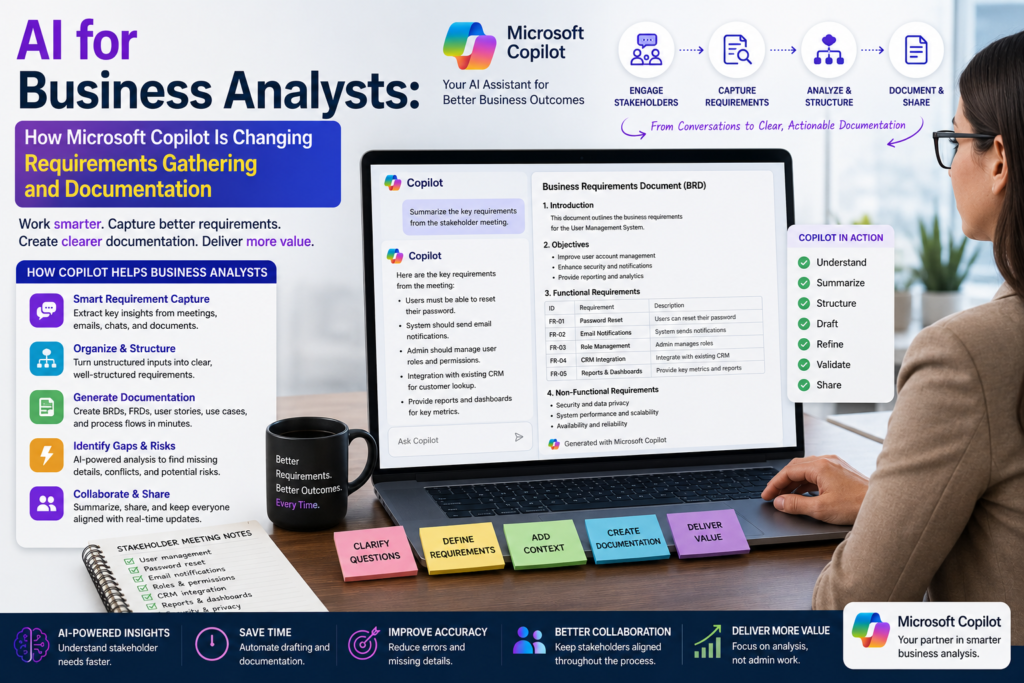
SQL, Power BI or Tableau, Jira and Confluence, and basic AI literacy are now treated as standard BA tools, not specialist extras. A candidate who can analyse a business problem brilliantly in conversation but can’t demonstrate comfort with these tools is often screened out before that judgement is ever heard.
3. No Formal Process Modelling or Requirements Documentation
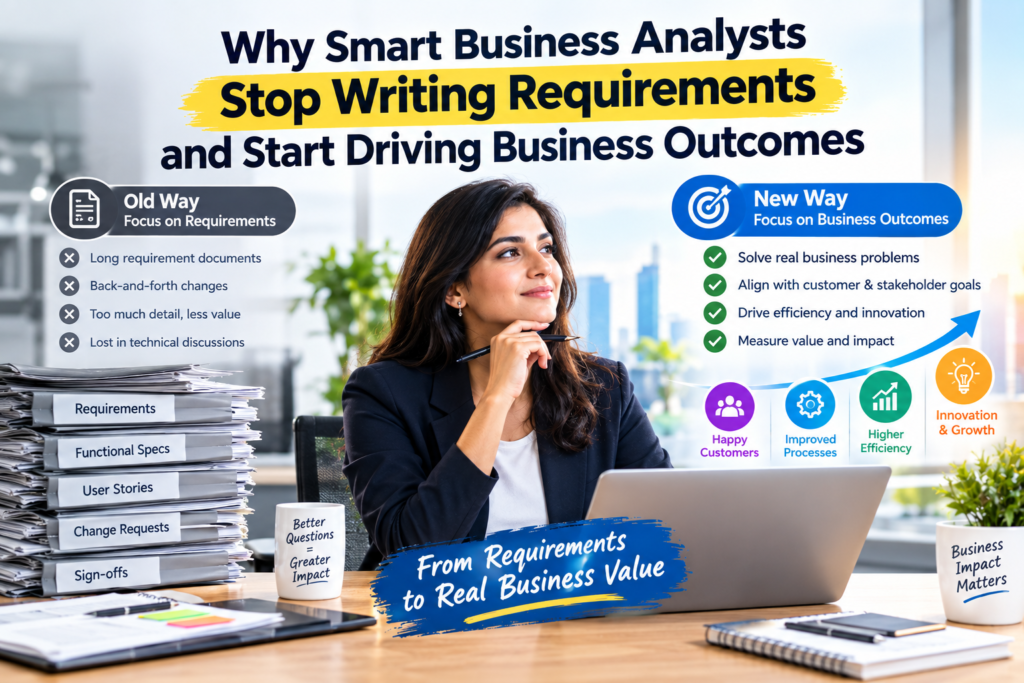
Being able to describe a process verbally is different from producing a clear BPMN process map or a well-structured requirements document that a delivery team can act on directly. This specific, learnable skill is one of the fastest parts of the business analyst skills gap to close, and one of the most commonly missing.
4. Stakeholder Management That Isn’t Demonstrated Clearly
Many experienced professionals manage stakeholders well every day without ever describing it that way. In an interview, vague answers about “working with people” read very differently from a clear example of eliciting conflicting requirements and resolving them, a gap in framing more than in ability.
5. AI Literacy and Modern Analysis Tools
AI and data literacy are now among the fastest-growing skill areas in business analysis. Professionals without hands-on exposure to modern, AI-assisted analysis workflows increasingly stand out for the wrong reasons, regardless of how strong their core business thinking is.
How to Stand Out and Close the Business Analyst Skills Gap

None of these five gaps require years to close. Here’s how to fix the business analyst skills gap deliberately.
Learn a Recognised Framework
Structured exposure to BABOK techniques or an Agile Business Analysis framework gives your existing judgement a vocabulary and structure employers immediately recognise.
Build Technical Fluency in the Tools Employers Expect
Comfort with core BA tools, even at a working level, closes one of the most commonly cited parts of the business analyst skills gap and lets you demonstrate capability rather than just describe it.
Practice Process Modelling and Requirements Documentation
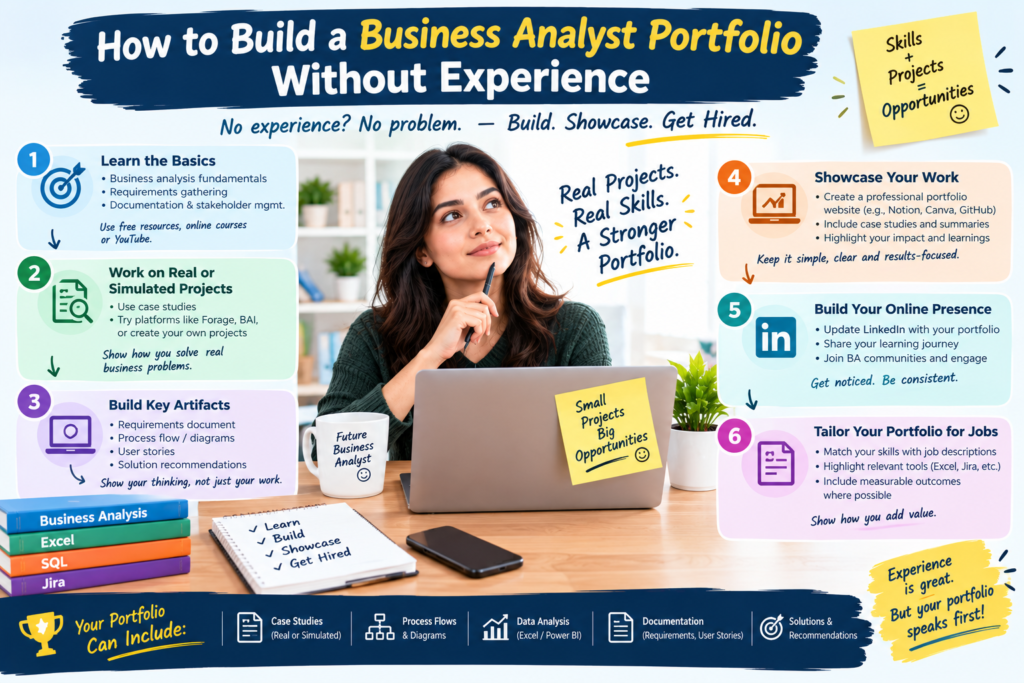
A sample BPMN diagram or a well-structured requirements document, built on a real or hypothetical scenario, gives interviewers something concrete to discuss and instantly demonstrates a skill many candidates only describe in the abstract.
Translate Existing Experience into BA Language
Reframe stakeholder situations you’ve already navigated using BA terminology: requirements elicitation, conflicting stakeholder needs, process improvement outcomes. The underlying skill was already there; it just wasn’t labelled clearly.
Closing the Gap with the Right Training
Structured, hands-on training is the fastest way to close the business analyst skills gap, because it builds the exact frameworks, techniques and tools employers screen for. Business Analysis Courses offers practical, certification-aligned training built around real workplace scenarios.
Popular pathways to build a demonstrable, job-ready BA skill set include:
- Agile Business Analysis (AgileBA®) Foundation — structured BA fundamentals inside Agile delivery
- Agile Business Analysis (AgileBA®) Practitioner — applying BA techniques to real projects
- Business Analysis Techniques Course — requirements gathering and process modelling
- ISQI Agile Business Analysis Certification — a recognised, employer-trusted credential
- IREB Requirements Engineering Foundation (CPRE-FL) — formal requirements documentation skills
- BCS Business Change Foundation — structured approaches to organisational change
Each course pairs structured technique with practical, hands-on exercises, so the business analyst skills gap closes on the exact points employers actually screen for.
Business Analysis Courses Available in Cities Across Australia
Training is available in person or live online, so wherever you’re based, you can start closing the business analyst skills gap: Adelaide, Brisbane, Canberra, Melbourne, Perth, and Sydney.
Frequently Asked Questions
What exactly is the business analyst skills gap?
The business analyst skills gap is the difference between having strong general business judgement and having the specific, structured techniques, frameworks and tools employers use to evaluate BA capability, such as BABOK, BPMN process modelling and core BA software.
Why do smart, experienced professionals get overlooked for BA roles?
Often because their skills aren’t framed in language a hiring manager or ATS recognises as business analysis capability. The underlying judgement is usually there; it’s the structured proof and vocabulary that’s missing.
Which skills close the business analyst skills gap fastest?
Exposure to a recognised framework, comfort with core BA tools, and practice producing a requirements document or process map close most of the gap quickly. Structured training through Business Analysis Courses is designed to build all three together.
Do I need a formal certification to become a business analyst?
It’s not always mandatory, but a recognised certification gives employers a fast, trusted signal of capability and consistently helps candidates stand out in a competitive field.
Ready to close the business analyst skills gap and start standing out for BA roles? Contact the Business Analysis Courses team and get matched with the right training pathway.