
Building a business analyst portfolio without experience feels impossible until you realise the trick: employers aren’t actually looking for years on the job, they’re looking for evidence you can think like a BA. Across Sydney, Melbourne, Brisbane, Perth, Adelaide and Canberra, hiring managers routinely shortlist junior candidates who show up with two or three well-documented practice projects over candidates with a generic resume and no proof of applied skill. This guide walks through exactly what to build, and how to present it.
Why a Portfolio Matters More Than a Resume for Junior BAs
Business analysis is a documentation-heavy, evidence-based discipline, so a portfolio is simply the most natural way to prove you can do the job a resume line saying “strong analytical skills” carries almost no weight next to an actual requirements document or process map you built yourself. Employers in Melbourne and Sydney’s professional services and finance sectors, in particular, have started asking junior candidates to walk through a portfolio piece as a standard part of the interview.
What to Include in a Business Analyst Portfolio Without Experience
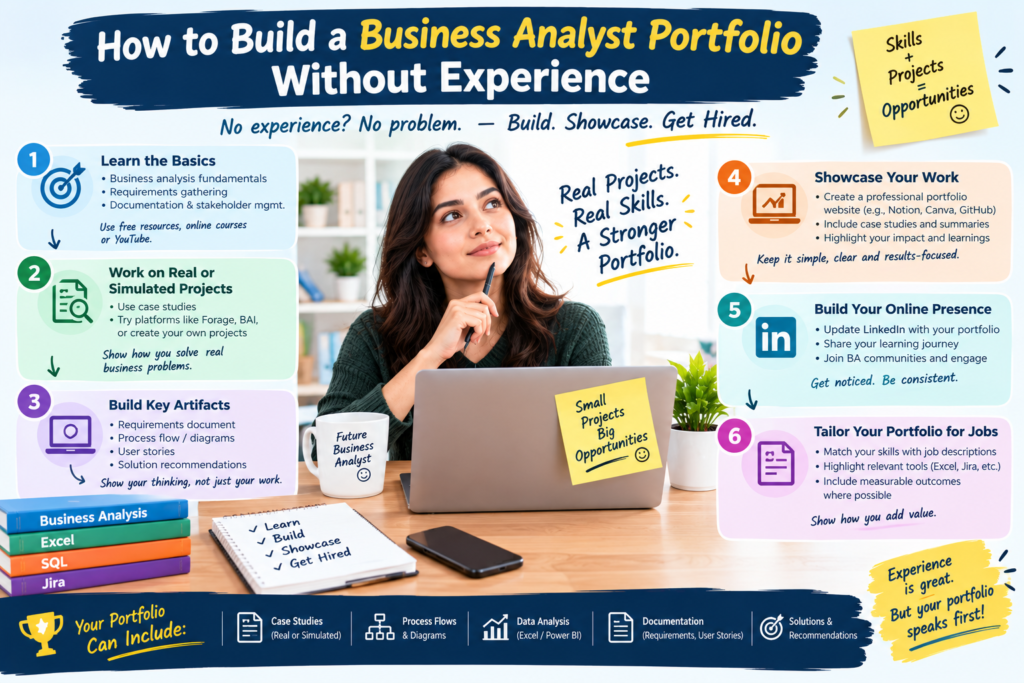
1. A Business Requirements Document (BRD) for a Fictional or Real Small Business
How to build it:
Pick a simple, relatable scenario a local cafe wanting an online ordering system, or a small retailer wanting a loyalty program and write a proper BRD covering business objectives, stakeholders, functional and non-functional requirements. This is the single most common artifact employers expect to see, and it’s entirely achievable without a job.
2. A Process Map (As-Is and To-Be)
How to build it:
Document a current, inefficient process (as-is) and a proposed improved version (to-be) using a simple flowchart tool. Brisbane and Perth employers particularly value candidates who can show process improvement thinking, since it’s a core part of day-to-day BA work in operations-heavy industries.
3. User Stories and Acceptance Criteria
How to build it:
Take the same fictional project and write a set of user stories in standard “As a [user], I want [goal], so that [benefit]” format, each with clear acceptance criteria. This demonstrates you understand Agile ways of working, which is now the default delivery method at most Australian employers.
4. A Stakeholder Analysis and Communication Plan
How to build it:
Map out fictional stakeholders by influence and interest, and write a short communication plan explaining how you’d manage each group. Canberra government and enterprise employers specifically test for this skill because stakeholder management failures are one of the most common reasons projects stall.
5. A Simple Data or Gap Analysis
How to build it:
Compare a current state against a desired future state for a small process or system, and document the gaps and recommended fixes. This shows structured, analytical thinking beyond documentation alone, which distinguishes a strong candidate from someone who only wrote requirements down.
Where to Find Realistic Practice Scenarios
- Pick a business you already understand well even a part-time job, a family business, or a local shop you’re a regular at.
- Use a public case study or open dataset and treat it as a live BA problem to document.
- Join a short, structured course project so you’re working from real templates rather than guessing the format.
- Volunteer to document a simple process for a not-for-profit or community group, which also becomes a genuine reference.
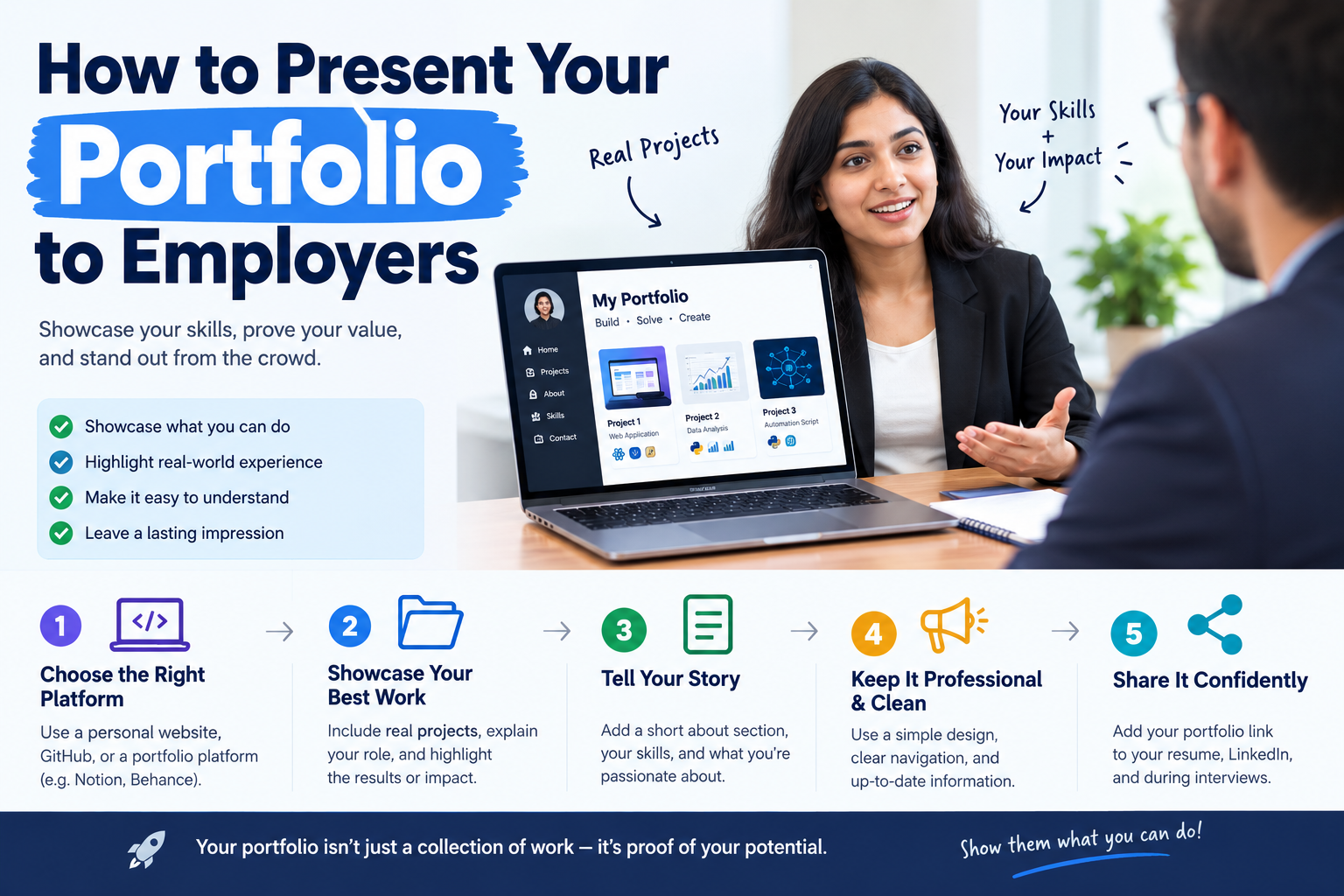
How to Present Your Portfolio to Employers
| Presentation Method | Best For | What to Include |
| A simple PDF portfolio | Attaching to job applications | 2–3 best artifacts with a one-paragraph project summary each |
| A LinkedIn featured section | Passive visibility to recruiters | Short project descriptions linking to full documents |
| A live walkthrough in interview | Final-stage interviews | One project talked through end-to-end, including a mistake you fixed |
Certifications and Courses That Build a Stronger Portfolio
A structured business analysis course gives you real templates, feedback, and a guided project to build from, so your portfolio reflects industry-standard formats rather than a self-taught guess at what a BRD should look like.
- Start with a Business Analysis Course covering requirements gathering, process mapping and Agile BA fundamentals.
- Explore the related Business Analyst Course for certification pathway options.
- Explore the full IT and business skills catalogue at Logitrain, Australia’s long-established training provider.
Further Reading
- Current business analyst job vacancies across Australia on SEEK.
- The official Business Analysis Body of Knowledge (BABOK) overview from the International Institute of Business Analysis (IIBA).
Final Tips Before You Start Applying
- Quality over quantity two or three polished artifacts beat ten rushed ones.
- Be ready to explain your thinking, not just present the finished document.
- Keep a PDF version ready to attach directly to job applications, not just linked online.
Ready to build a portfolio that actually gets you shortlisted? Explore the full Business Analysis Course at businessanalysiscourses.com.au and get the templates and guided projects to build a business analyst portfolio without experience employers in Sydney, Melbourne, Brisbane, Perth, Adelaide and Canberra will actually notice.